It’s crazy, how many recipes I’ve made that I intend to “make again soon” and then completely forget. Then there are the recipes that Ken and I both love, but make once a year. If we say that we have a dish frequently, it probably means we’ve made it three times in the past year 😄
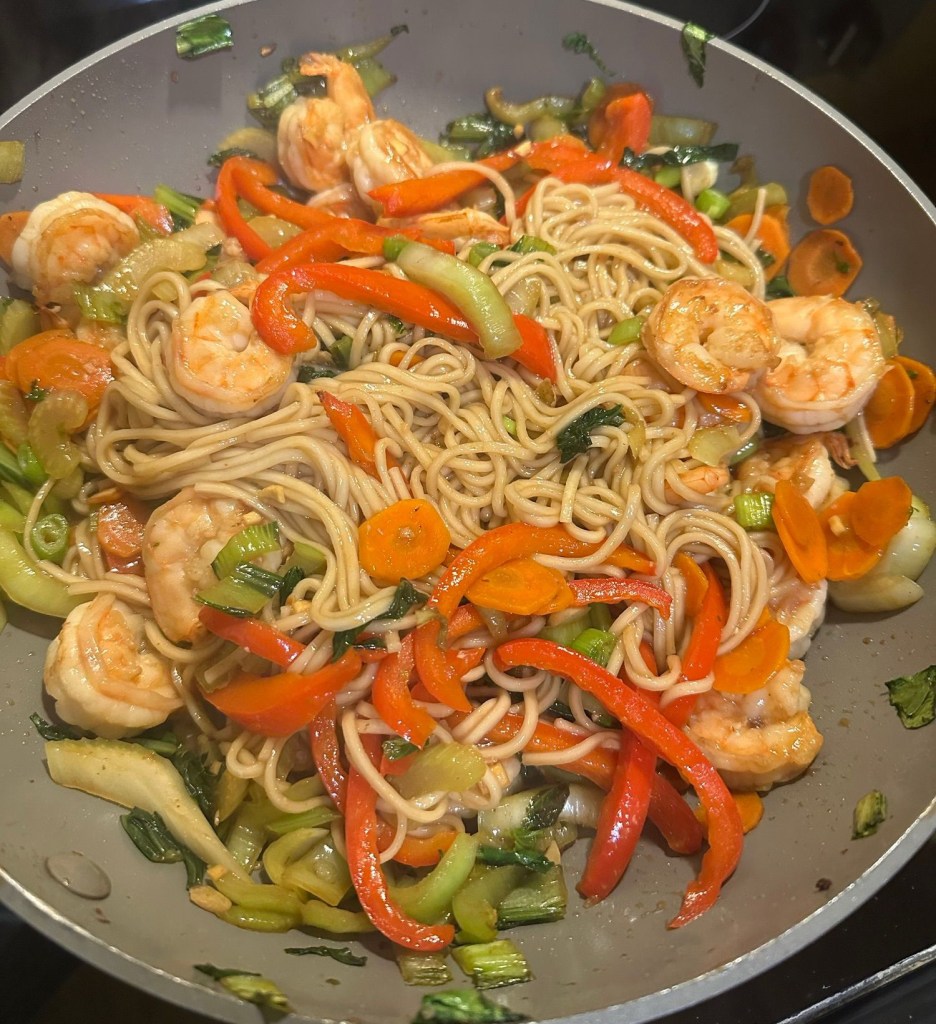
Lo mein may be my favorite type of stir fry. I love pasta, and Chinese noodles may be the original pasta. I agreed very quickly when Ken suggested shrimp lo mein for this week’s menu. Then I went looking for my recipe. I went through my annual menu journals, where I keep a record of what we cook and the source of the recipe. From what I found, the last time I cooked shrimp lo mein was in February 2022!
According to the 2022 planner, the recipe was in my file, not from one of my cookbooks. However, I couldn’t find it in the file. So I defaulted to a Google search. There were numerous recipes, but none that looked familiar. Most included cabbage, and I don’t remember including cabbage in a lo mein. I spotted one that used bok choy, and that sounded really appealing. It looked like I had a recipe.
The recipe was from a site called Zestful Kitchen, authored by Lauren Grant. It turned out to be another instance where I didn’t look beyond the ingredient list. No, I was not going to boil the bok choy! I decided to create my own recipe.
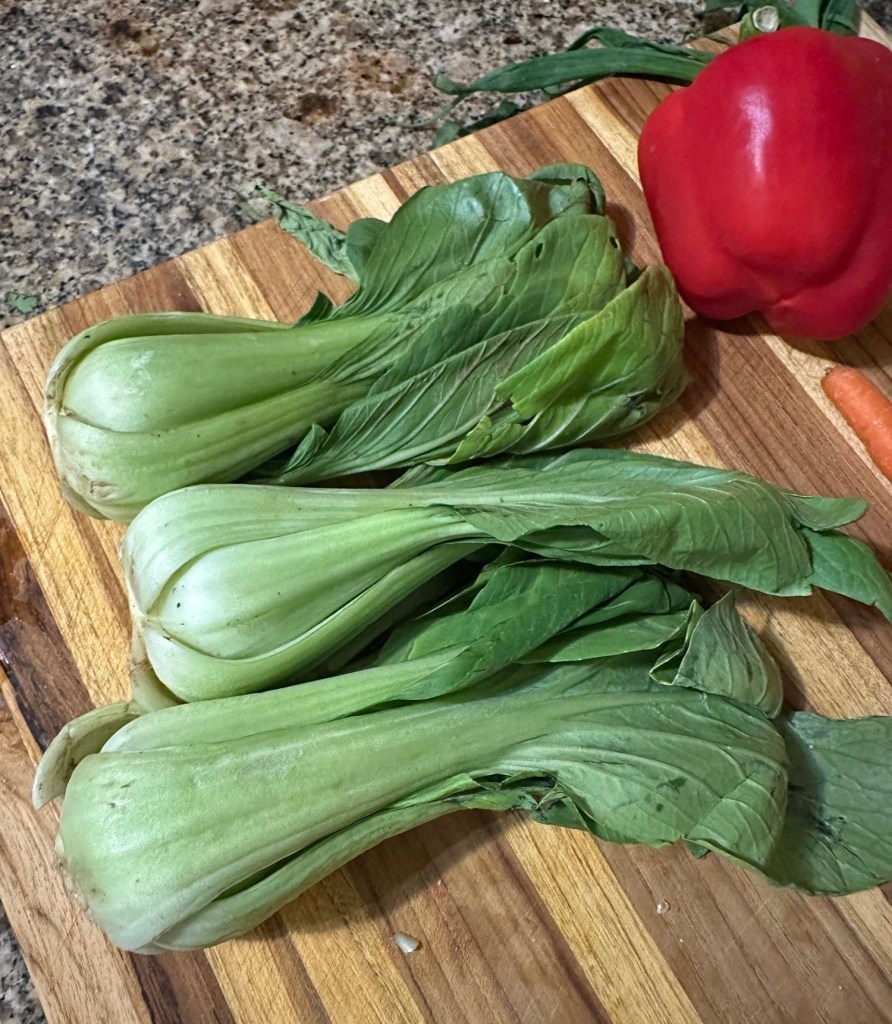
I hit the jackpot: I found baby bok choy at the market. When I bought it before, I had to make a special trip to find it, so I was excited. I would have had no problem using a standard head, but I probably would have had half of it leftover. Plus, the baby bok choy has a milder flavor.
For additional vegetables, I included a red bell pepper, celery, and carrots. I originally planned to cut carrots into matchsticks, but I decided to use my mandoline to cut thin slices. When I’ve had carrots in restaurant stir fries, they have been cut more on the bias, but I didn’t think of that until I finished cutting them. Next time.
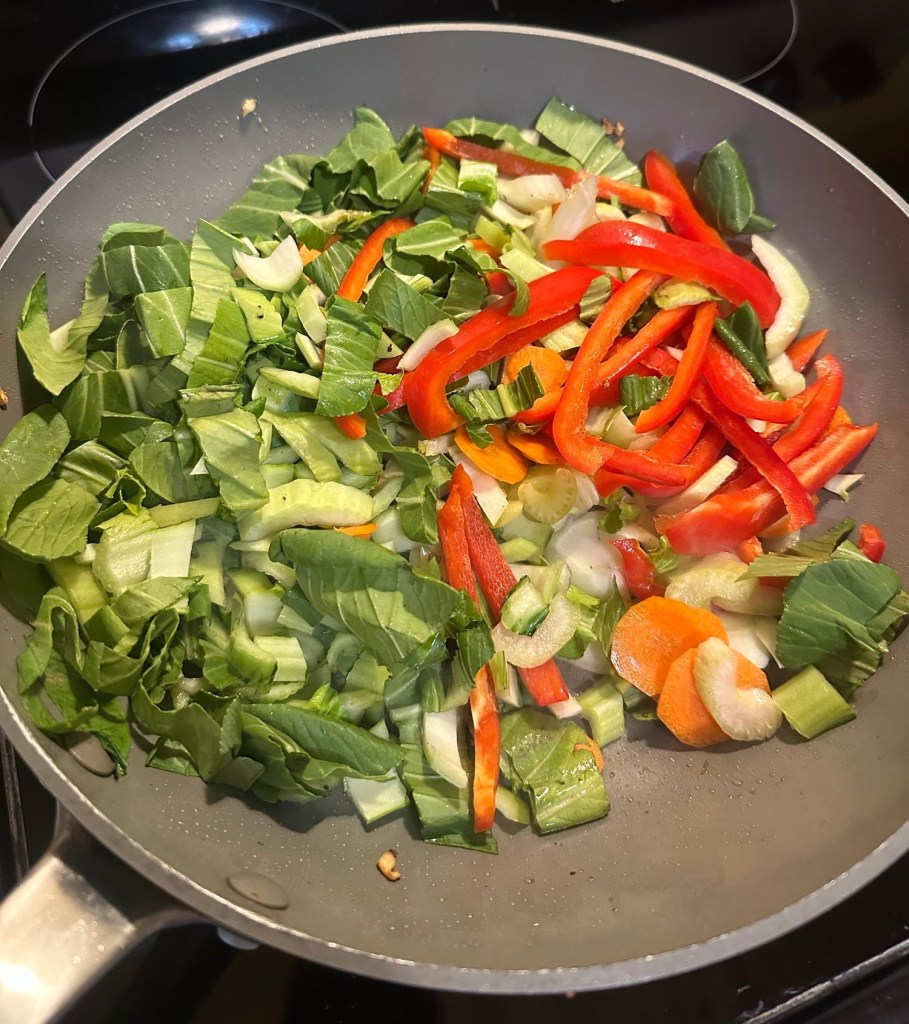
As with any stir fry, preparation is key. I had the vegetables sliced and the sauce ingredients mixed together ahead of time. Ken stepped into his usual role as shrimp peeler and deveiner. The additional step that lo mein requires is to cook the noodles, which I did just before I started to stir fry.
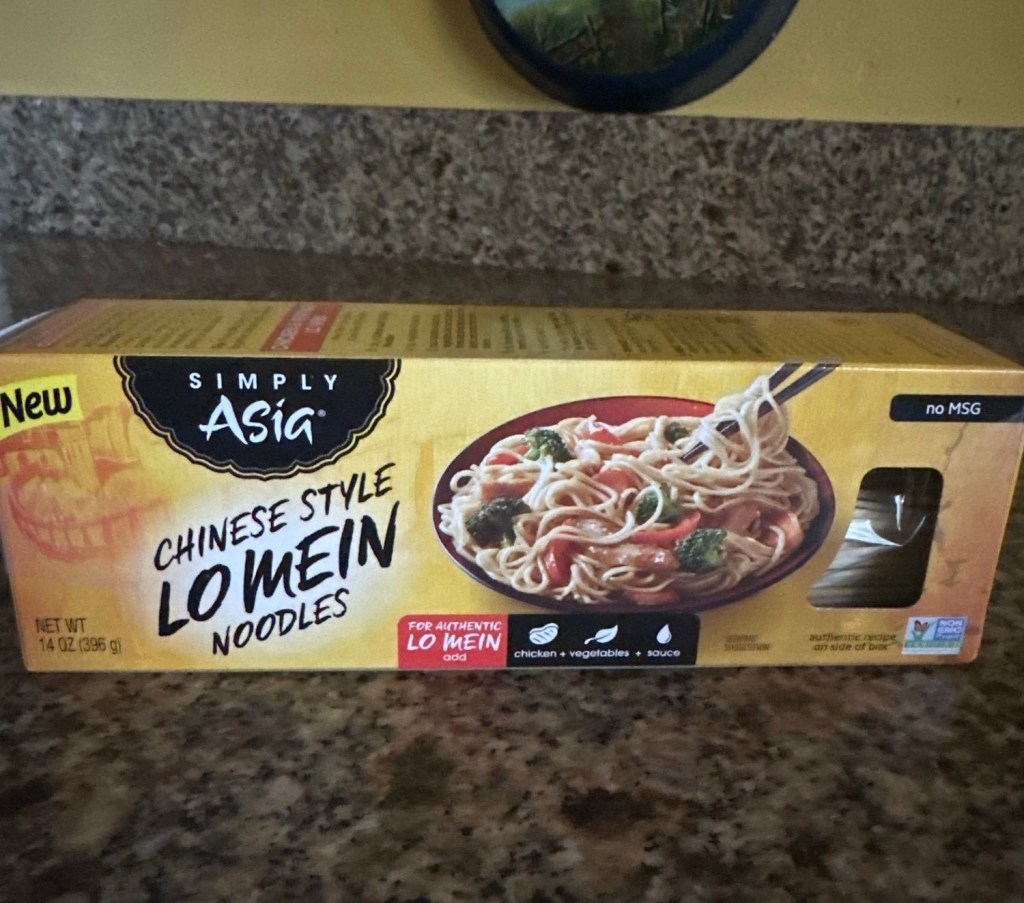
I found lo mein noodles in the Asian food section of our grocery store. You could also use spaghetti (break it in half) or ramen noodles without the seasoning packet. You could even use rice or udon noodles, but that would definitely change the texture of the dish.
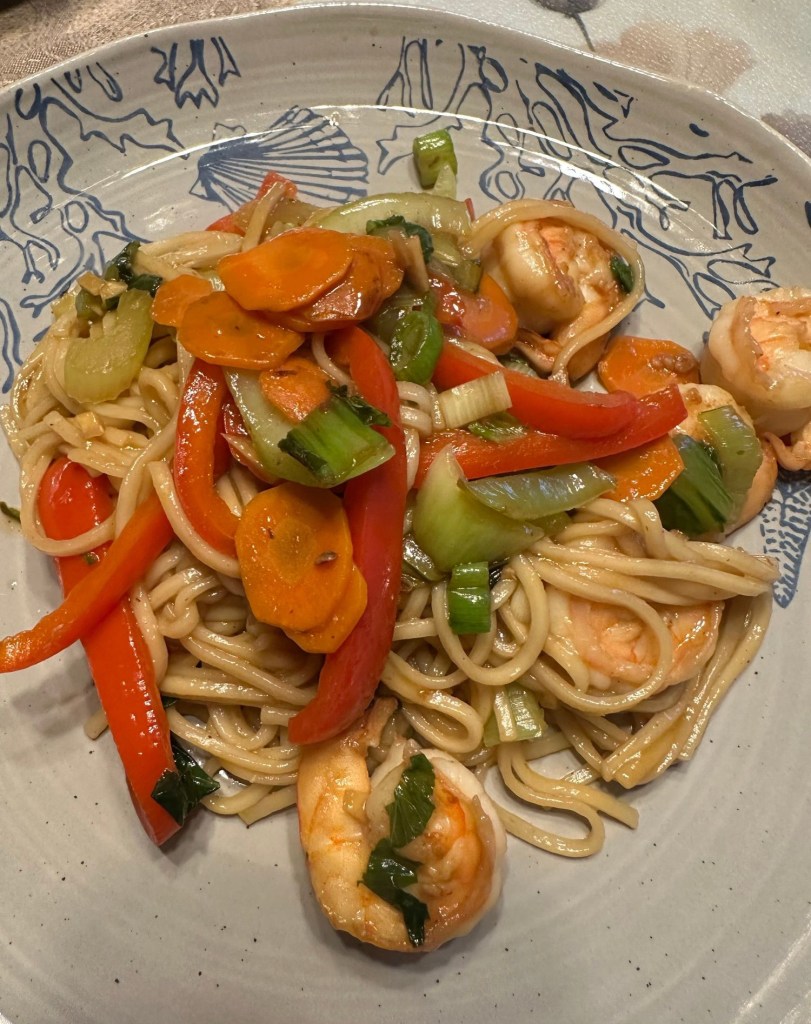
Shrimp Lo Mein, Lynn’s Version
- 1/3 cup low-sodium soy sauce
- 2 tablespoons hoisin sauce
- 2 tablespoons finely chopped fresh ginger
- 3 heads baby bok choy or 1/2 head regular bok choy, sliced
- 3/4 cup sliced celery
- 3/4 cup sliced carrots
- 1 red bell pepper, thinly sliced
- 1/2 (14-ounce) package lo mein noodles, or 7 ounces broken spaghetti
- 2 tablespoons canola or other neutral oil
- 1 teaspoon sesame oil
- 1 pound large (21-25) shrimp, peeled and deveined
- 2 garlic cloves, minced
- 2 scallions, thinly sliced
I’m n a small bowl, mix together the soy sauce, hoisin, and ginger. Set aside.
Cook the lo mein noodles according to package directions. Toss with 1/2 tablespoon canola oil and set aside.
In a wok or sauté pan? Heat the remaining 1 1/2 tablespoons oil over medium high heat. Add the shrimp and garlic and cook until shrimp are just pink. Remove from wok with a slotted spoon.
Add the sesame oil to the wok. When hot, add bok choy, celery, carrots, and bell pepper. Stir fry for 3 minutes, or until bok choy is tender but still slightly crunchy. Add sauce to the vegetables and mix, then add the noodles and toss to coat.
Return the shrimp to the wok, along with the scallions. Heat through, then serve immediately. Makes 4 servings.
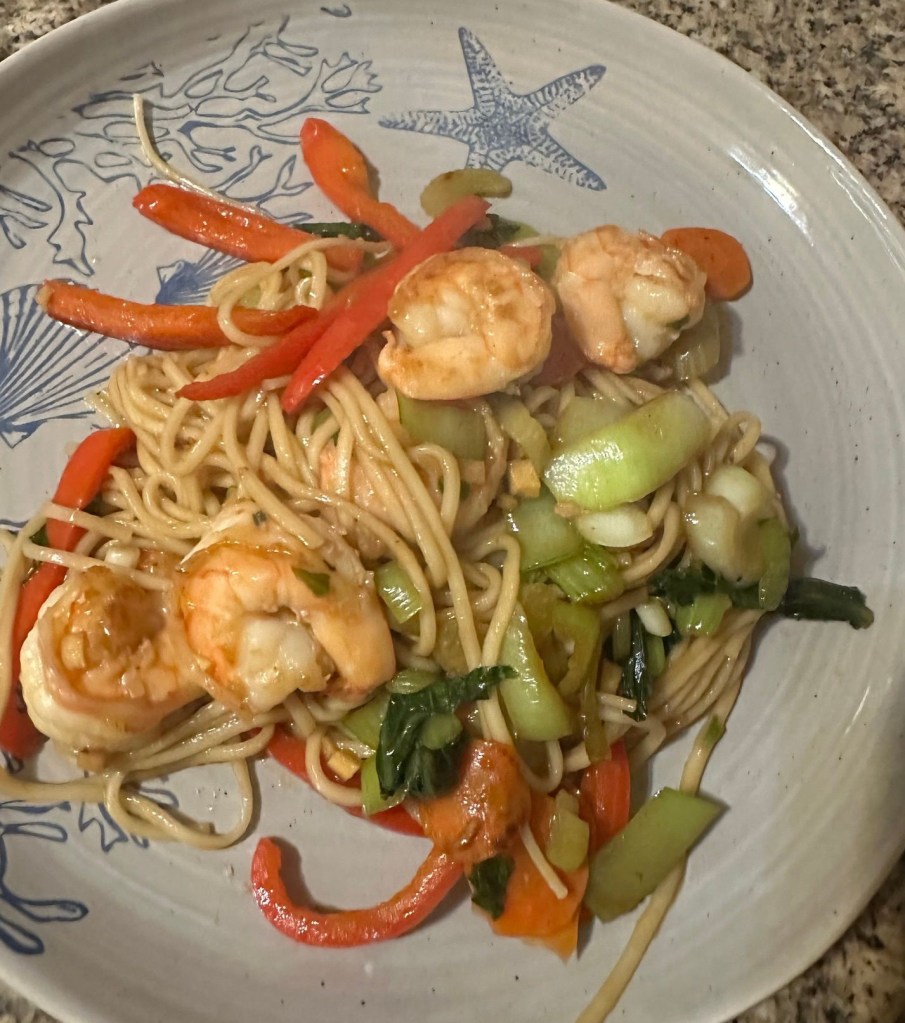
The lo mein was even better than I remembered. No, I will not wait another four years to make this again!
Happy eating!




Leave a Reply