I cooked a favorite chicken dish that I’ve made for many years. I realized that hadn’t shared the recipe. When I started researching the origins of the dish, I discovered two distinctly different dishes with essentially the same name. I ended up making another trip down the research rabbit hole.
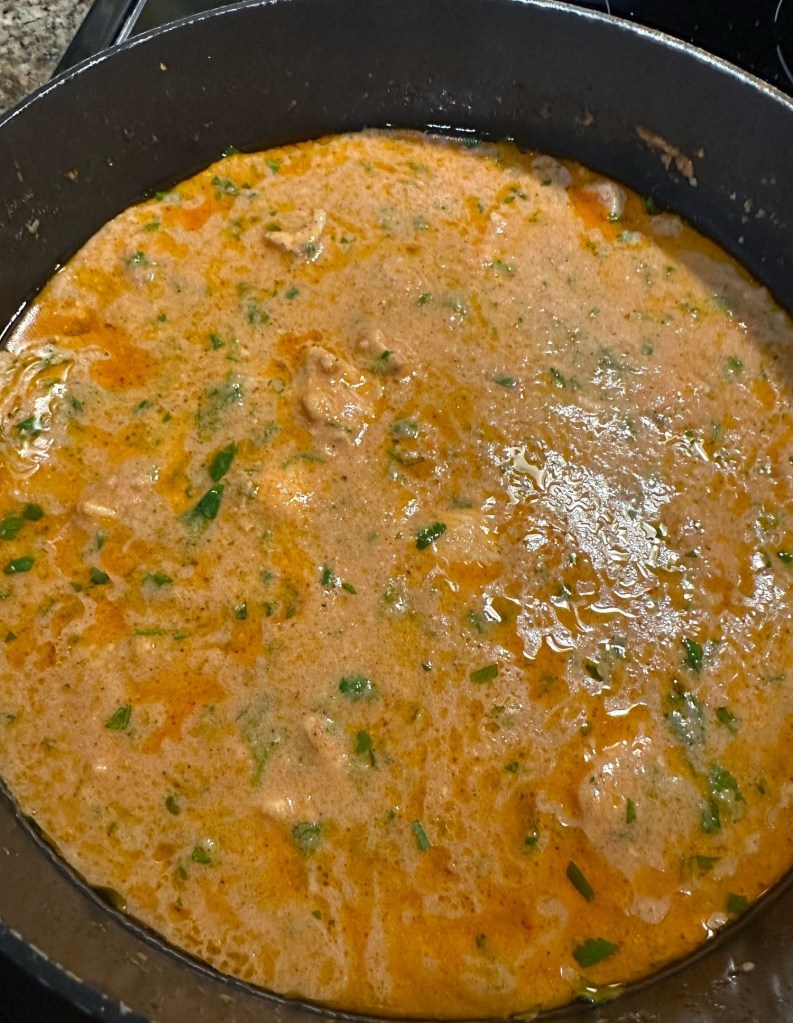
Chicken Kabuli is one of the first recipes I cooked from Julie Sahni’s Classic Indian Cooking. It’s boneless chicken breast chunks in a creamy tomato sauce seasoned with a delicious combination on warm spices. It’s one of our favorites. Ken always calls it “Indian food for people who think they don’t like Indian food.”
When I started researching the dish, I kept coming across “chicken Kabuli pulao,” which turns out to be one of the national dishes of Afghanistan. Kabuli pulao is what most of us in this country would call a pilaf. It can be made with chicken or meat. It is definitely not the saucy dish I was familiar with. That version turns out to be a recipe that originated in northern India inspired by Afghan flavors. Instead of the onion base common in a lot of northern Indian recipes, it uses yogurt and ground nuts. Sahni’s recipe is cited as a source for every recipe I found. I guess I’m in good company 😀
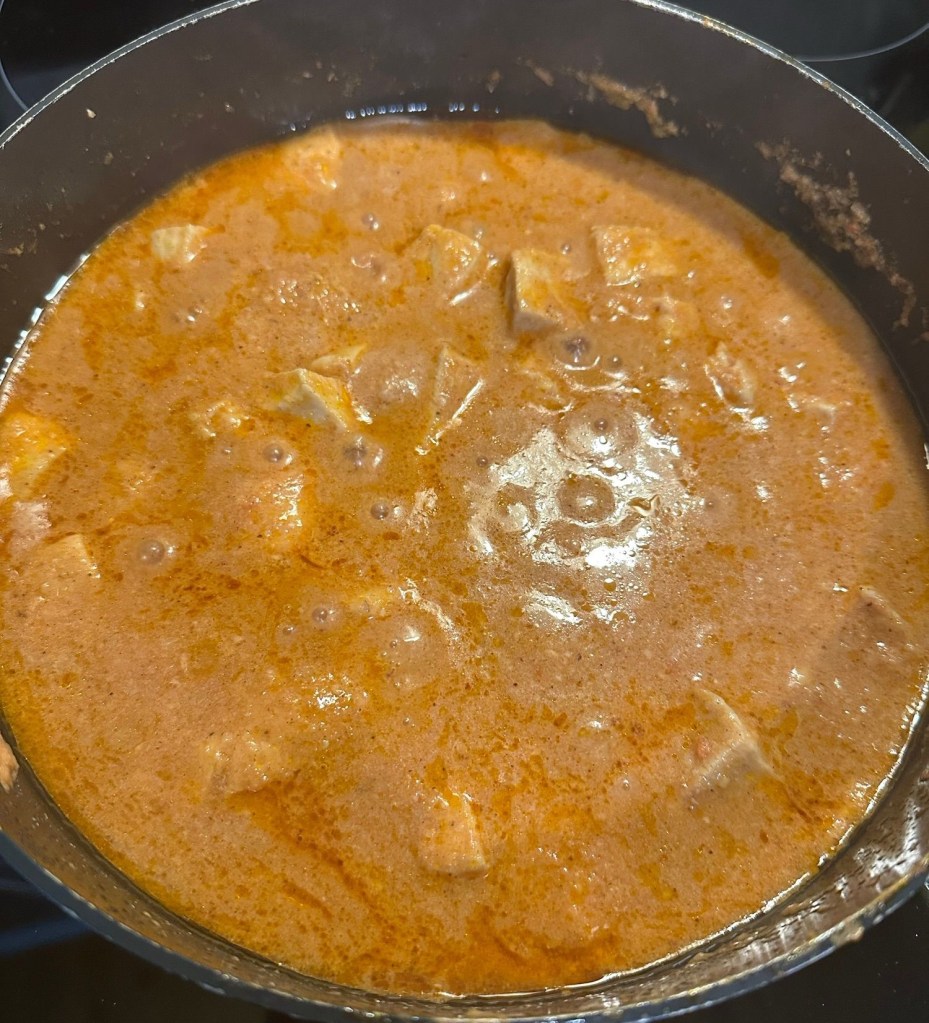
Chicken Kabuli is an elegant dish that I’ve served to guests, but it’s not complicated and doesn’t take all day. It’s all about the preparation. I combined yogurt, tomatoes, garlic, and fresh ginger in the blender and puréed it all. That mix cooks with some oil (which I have reduced significantly from the amount in the original recipe), and then cubed boneless, skinless chicken breast meat cooks in the sauce, along with the spices and some ground almonds. Just before serving, I added half-and-half (instead of heavy cream), ground pepper, and chopped cilantro.
Besides making changes to cut the fat, I deviate from the original recipe in two other ways. I use well-drained canned tomatoes instead of fresh, simply for convenience. The other adjustment is to reduce the amount of chicken, but not anything else. The original calls for three pounds of chicken, and I’ve made it that way when we’ve had company. It’s still absolutely delicious, but, for me, this dish is all about the sauce. Give me the sauce over some rice, and I’m a happy camper. I admit, I do considerably more taste testing than necessary when I make this 😂
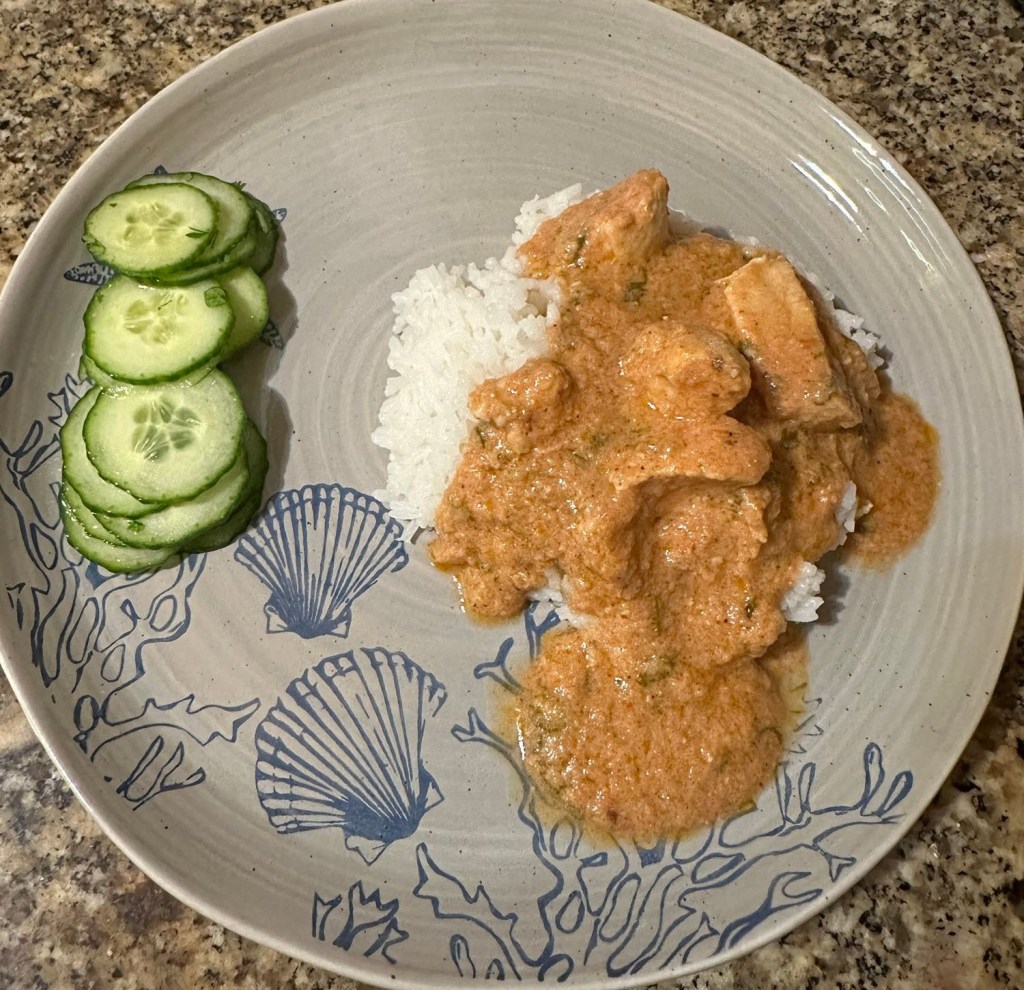
Chicken Kabuli
- 4 large garlic cloves, peeled
- 3 tablespoons coarsely chopped fresh ginger
- 1 15-ounce can tomatoes, well drained
- 1 cup plain yogurt (Greek or regular both work)
- 3 tablespoons vegetable oil
- 1 to 1 1/2 pounds boneless, skinless chicken breasts, cut into 1 1/2- inch cubes
- 1/2 teaspoon mace
- 1 teaspoon nutmeg
- 2 tablespoons ground blanched almonds
- 1 teaspoon ground cardamom
- 1 teaspoon ground cumin
- 1 teaspoon ground coriander
- 1 teaspoon kosher salt
- 1/2 cup half-and-half or heavy cream
- Coarsely ground black pepper, to taste
- 1/3 cup chopped fresh cilantro
Put garlic, ginger, tomatoes, and yogurt into the container of a blender or food processor, and run the machine until the ingredients are reduced to a smooth puree.
Put the oil and the puréed mixture in a large heavy-bottomed pan, preferably non-stick. Place the pan over medium-high heat, and cook until the puree bubbles, stirring constantly to prevent it from sticking, about 5 minutes.
Add chicken pieces and cook, stirring rapidly, until they lose their pink color and begin to sear slightly. Do not let them brown. Add the mace, nutmeg, almond powder, cardamom, cumin, coriander, and salt, and mix well. Reduce heat, cover, and cook for 30 minutes, stirring occasionally. Turn off heat, and let the dish rest, covered, for at least one hour. When ready to serve, reheat thoroughly, then add half-and-half, pepper, and cilantro. Let cook for 2 more minutes, then serve. Makes 4 servings.
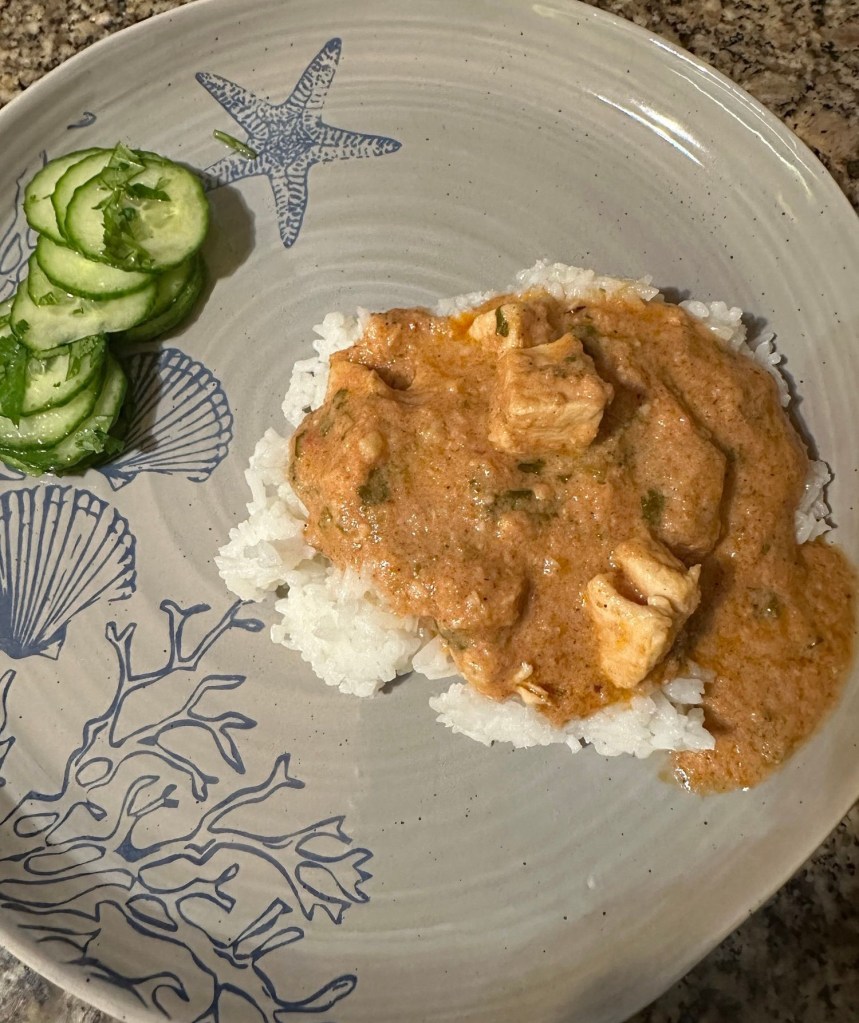
We always serve this over rice. I had thought about making basmati rice, but I cooked this on Sunday afternoon, and I was tired. I had filled in on piano for our church service, and playing piano in public is a high stress situation for me. Give me a microphone and I’ll belt out anything you want. Anyway, the container of regular long-grain rice was at the front of the cabinet, and that’s what I used.
I had intended to make a cucumber raita, the yogurt-based Indian accompaniment, but realized I’d only bought enough yogurt for the main dish. Instead, I put together a cucumber and cilantro salad that I’ve made before, which is dressed with olive oil and lime juice. It worked well, and made a pretty plate.
This is a dish that’s even better the next day. When we ate the leftovers, it looked as if we had licked our plates clean.
Happy eating!




Leave a Reply