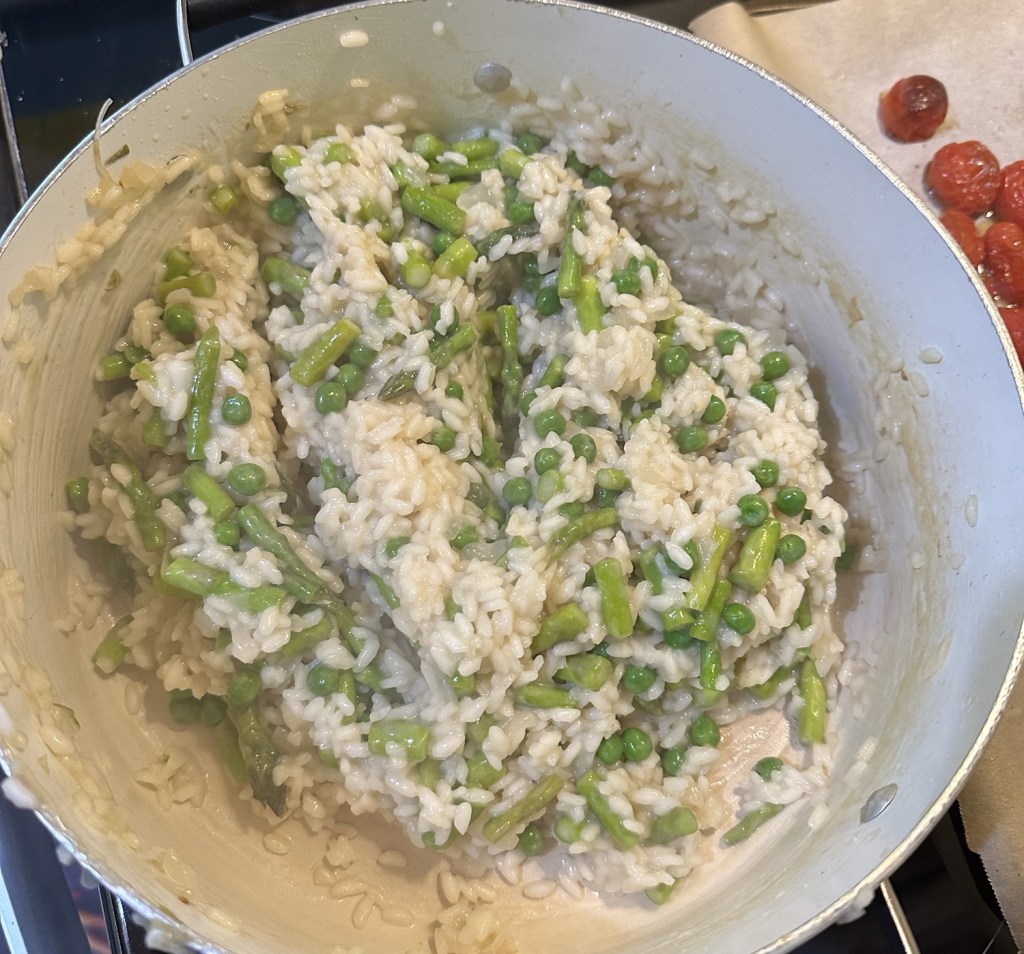
Primavera means spring in Italian, and the word conjures up images of green grass, trees leafing out, bright flowers, and warm days with cool nights. It’s the perfect sort of weather for pasta primavera or its risotto version—plenty of fresh, green vegetables in a creamy sauce over pasta, or those same vegetables incorporated into a risotto.
Ken and I enjoyed eating risotto primavera last Friday evening, but I can’t say that making it was a particularly pleasant experience. I was prepared for the labor involved; I try to adopt my friend Mary’s attitude that stirring risotto is a form of meditation. It’s a lot easier to keep that mindset, though, when you have spring-like temperatures. In hot and humid South Florida, standing by the stove where the oven was blasting at 450 degrees to roast the tomatoes that go atop the finished dish, I was contemplating which I needed more, food or a shower. Yes, the air conditioning was working just fine, but I was still sweaty by the time we sat down to eat.
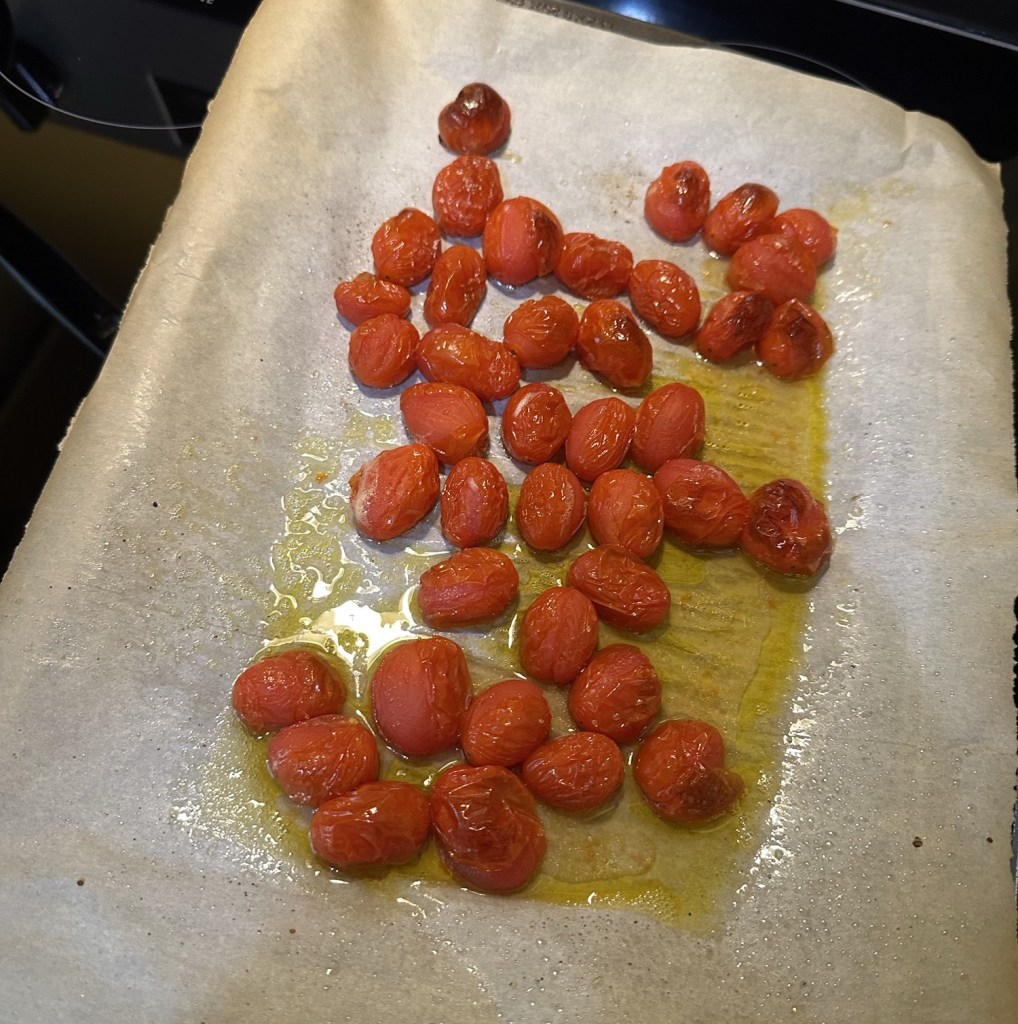
One taste and I knew that the risotto was worth the effort. I started with a recipe from one of my Cooking Light annual compilations, but adapted it based on what I learned from other recipes.
As is typical for primavera dishes, the primary vegetables are asparagus and peas. The recipe called for adding the cut-up asparagus and frozen peas with the last addition of broth to the rice. I was concerned that the asparagus would be too crunchy for our tastes. (Fresh peas were not a consideration. In all the years I’ve lived in Florida, I have never seen fresh peas. It’s not something we grow here.) I had relatively thin asparagus, but not that thin. So I decided to sauté it at the beginning of the cooking process and set it aside. I also thawed the peas, so there were no concerns about cold peas.
The other major change I made was to include some white wine. The original recipe called for adding a couple tablespoons of white wine vinegar before beginning to add the broth. I discussed this with Ken, and he agreed that the idea of vinegar sounded crazy. So I substituted a half-cup of white wine and cooked it down before adding the broth. Finally, when I added Parmesan cheese at the end, I also stirred in a tablespoon of butter. Adding butter with the cheese is traditional. I understand that they were trying to cut the amount of fat, but it’s risotto! Some things you just don’t mess with.
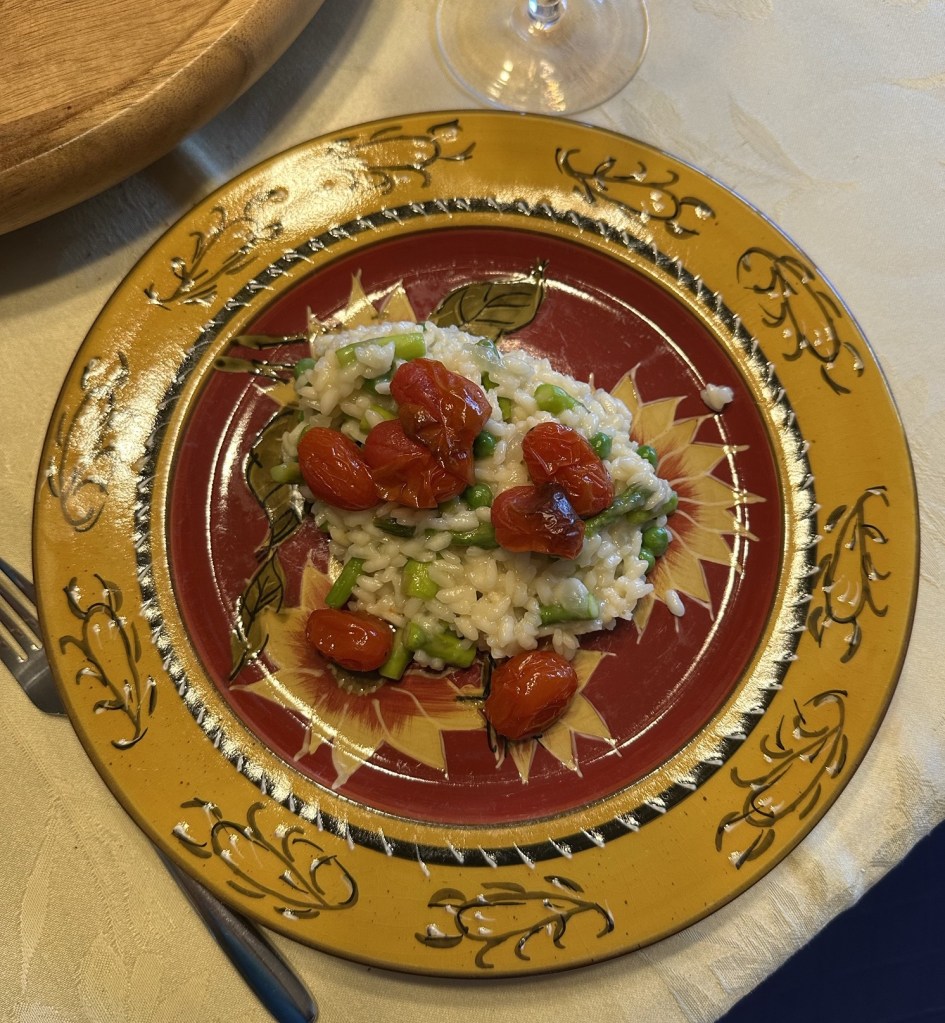
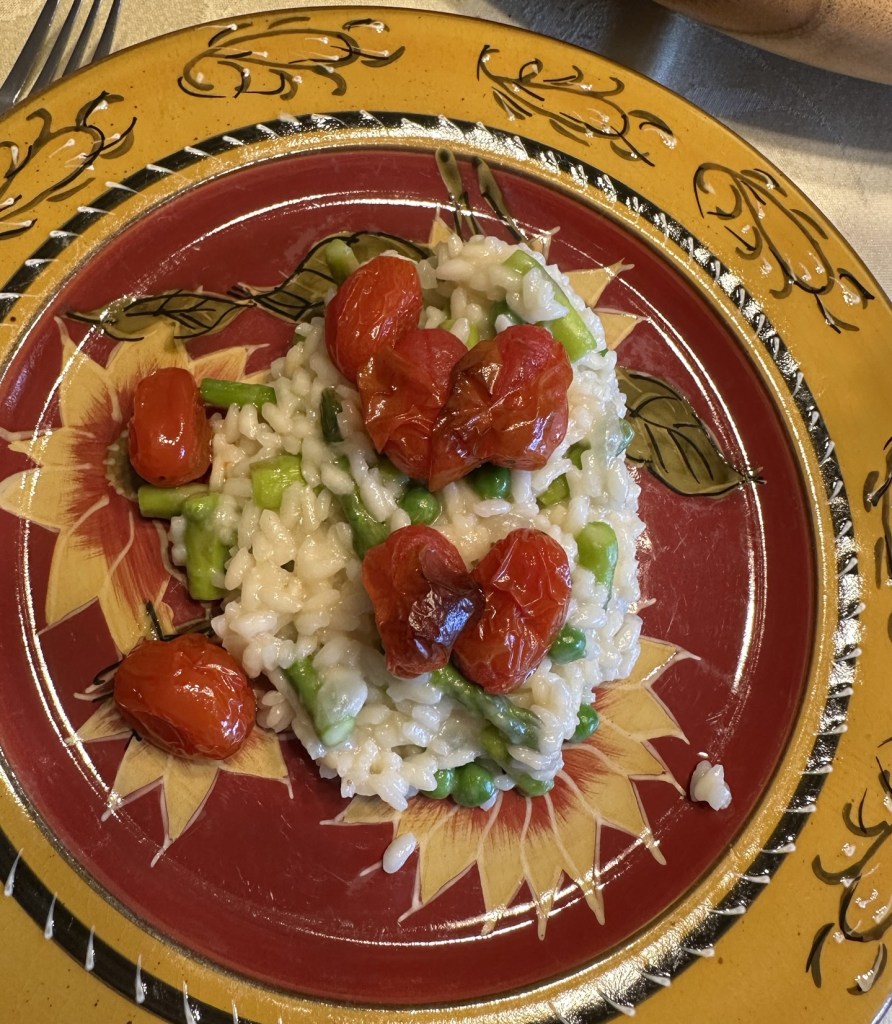
The result was delicious. The roasted tomatoes were a terrific addition. The risotto wasn’t as loose as you’d expect, probably because I used such a small amount of butter, plus I tend to cook it a minute or two more than I should. It’s hard to get my head around what is the correct texture of the rice. There was still some chew, but I suspect not enough to be authentic. Still, we enjoyed it. I’m waiting until after the first Florida cold front comes through to make it again, though.
Risotto Primavera
- 3 tablespoons olive oil, divided
- 1 teaspoon salt, divided
- 1 pint grape tomatoes
- 2 1/4 cups low-sodium chicken broth
- 3 1/4 cups water
- 1 cup chopped onion
- 1 1/2 cups Arborio rice
- 1/2 cup dry white wine
- 1/2 cup frozen green peas
- 12 ounces asparagus, trimmed and cut into 1-inch pieces
- 1/3 cup grated Parmesan cheese
- 1 tablespoon butter
- 1 tablespoon fresh lemon juice
- 1/4 teaspoon black pepper
Preheat oven to 450 degrees. Toss 1 tablespoon olive oil, 1/2 teaspoon salt, and tomatoes on a parchment lined jelly-roll pan. Bake at 450 for 15 minutes or until tomatoes burst.
Heat water and broth in a saucepan over medium heat. Do not boil.
Heat 1 tablespoon of olive oil in a large Dutch oven over medium-high heat. Add asparagus pieces and sauté for 2 minutes. Remove from pan and set aside.
Add remaining tablespoon of oil to the pan. Add onion to pan; cook 3-4 minutes, until onion is soft and translucent. Add rice; cook for 2 minutes, stirring to coat grains with oil and lightly toast. Stir in wine and cook until liquid is absorbed. Add broth/water, one-half cup at a time, stirring constantly until each portion is absorbed before adding the next (about 20 minutes total). Return asparagus, as well as the peas, to pan with the last 1/2 cup of broth. Remove from heat; stir in cheese, butter, lemon juice, and pepper. Top with tomatoes to serve. Sprinkle with additional Parmesan, if desired.
Happy eating!



 So Many Dishes
Leave a reply to devotedlybouquetd1baef0377 Cancel reply