Among my fondest memories of graduate school are the times spent with friends who were international students. Ken’s department attracted students from India and the Middle East, and as it was a small department, we spent a lot of time together. One of the best parts was sharing food.
Ken and I had a reputation as adventurous eaters, so we were lucky enough to be invited to share some unique meals. Probably the most memorable was when we joined Ahmed, a student from Saudi Arabia, for dinner, along with his Saudi housemates. Ahmed served a deliciously spiced leg of lamb. I remember sitting on the floor around a low table as he taught us how to tear the flatbread to pick up the meat and salad. Ken is left handed, which caused some consternation, and only the right hand is to be used to pick up food.
When there was a department-wide pot luck, Ahmed would bring a dish, always seasoned with the same aromatic spices. I asked him what he used, but he didn’t know. His mother sent him a spice mix that she made at home in Saudi Arabia, and that was what he always used.
Ahmed finished his degree a few months before Ken did. As he was preparing to head home, he gave me his remaining jar of the spice mix! As I recall, it was in a McCormick spice container, but the heady aroma was unmistakable.
I experimented with that mix, adding it to stews, seasoning roasts, mixing it with vegetables. I sniffed and sniffed to try to identify the specific ingredients, but couldn’t really get beyond cinnamon. At the time, I had a subscription to Bon Appetit magazine, so I wrote to them, asking if they were familiar with a Saudi spice blend, but they weren’t familiar with any. I used the last of the mix, but kept the container, just to sniff.
A few years later, we bought The Complete Middle East Cookbook by Tess Mallos. One of the recipes we decided to try was titled Spiced Chicken and Rice, and it called for a spice mix called Baharat. The book included that recipe, as well, so I mixed that first. One sniff told me that I’d recreated what we called “Ahmed’s spice.”
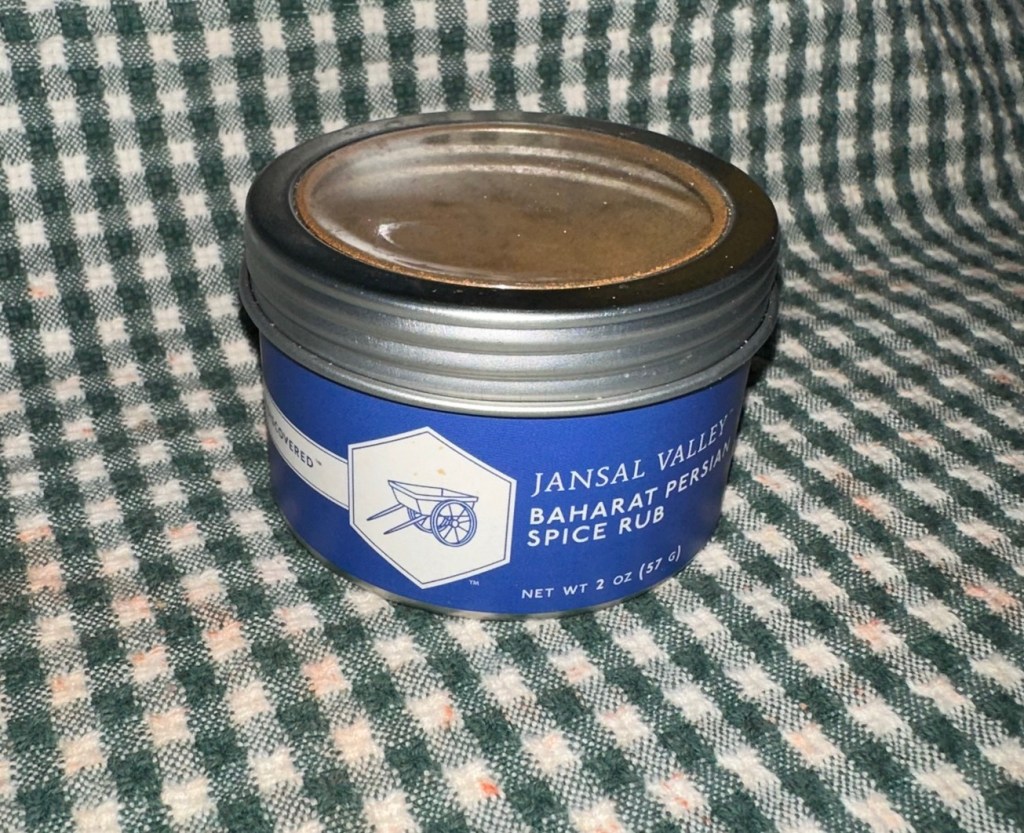
I have since discovered that you can buy commercially prepared Baharat. As with any spice blend, there are various recipes, so each commercial product is different. Ken used one last night in the dish he made, but the one we have now (which is not the one in the picture) has too much cinnamon for my taste. I’m ready to make a batch of my own again.
Because the recipe in the cookbook makes a huge quantity of Baharat, this is my recipe, based on the proportions of the original:
Baharat
- 1 tablespoon ground black pepper
- 1 tablespoon ground coriander
- 1 tablespoon ground cinnamon
- 1 tablespoon ground cloves
- 1 tablespoon plus 1 teaspoon ground cumin
- 1/2 teaspoon ground cardamom
- 1 tablespoon ground nutmeg
- 2 tablespoons paprika
Mix spices together. Store in an airtight container.
The reason I’m waxing nostalgic is because Ken used Baharat in the dish he cooked Tuesday evening, which he called “Syrian Picadillo.” When we were in Orlando at our son’s a couple of weeks ago, he saw a recipe that interested him in one of Ben’s cookbooks. I think Ken must have taken a picture of it, because I spotted him reading something on his phone while he was in the kitchen. He can’t remember what cookbook he saw the recipe in, so I can’t list the source.
You may remember that I wrote about picadillo in my post Cuban Comfort Food. The similarities between the dishes are many. Both involve ground meat in a tomato sauce with chopped onions, garlic, and bell peppers. And both include olives. While I leave the olives whole in my Cuban picadillo, Ken chopped his. He also soaked golden raisins in water, and added them to the mix. His sauce had a deeper tomato flavor, as he used a 28-ounce can of crushed tomatoes plus a few tablespoons of tomato paste. It initially looked like a lot of sauce for one pound of meat (Ken used ground beef, but ground lamb would be wonderful cooked this way), but he cooked it uncovered at what I would describe as a hard simmer for about 20 minutes before covering the pan and reducing the heat.
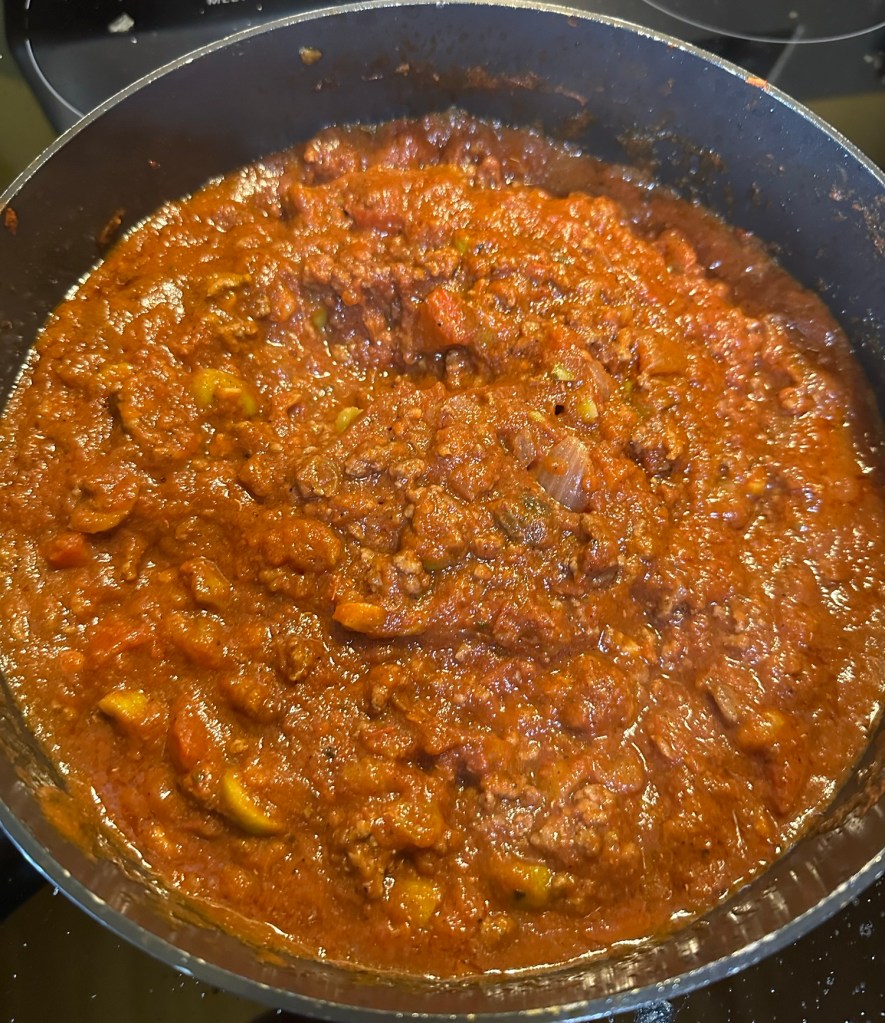
Of course, he used Baharat to season the dish. He said he added two heaping teaspoons of spice. Initially, I thought he could have used a bit less, but I’ve reconsidered. I think my first impression was colored by the amount of cinnamon in the mix he used. I love cinnamon in savory dishes, but it seemed to dominate the other flavors. Also, when we ate the leftovers last night, it definitely had mellowed.
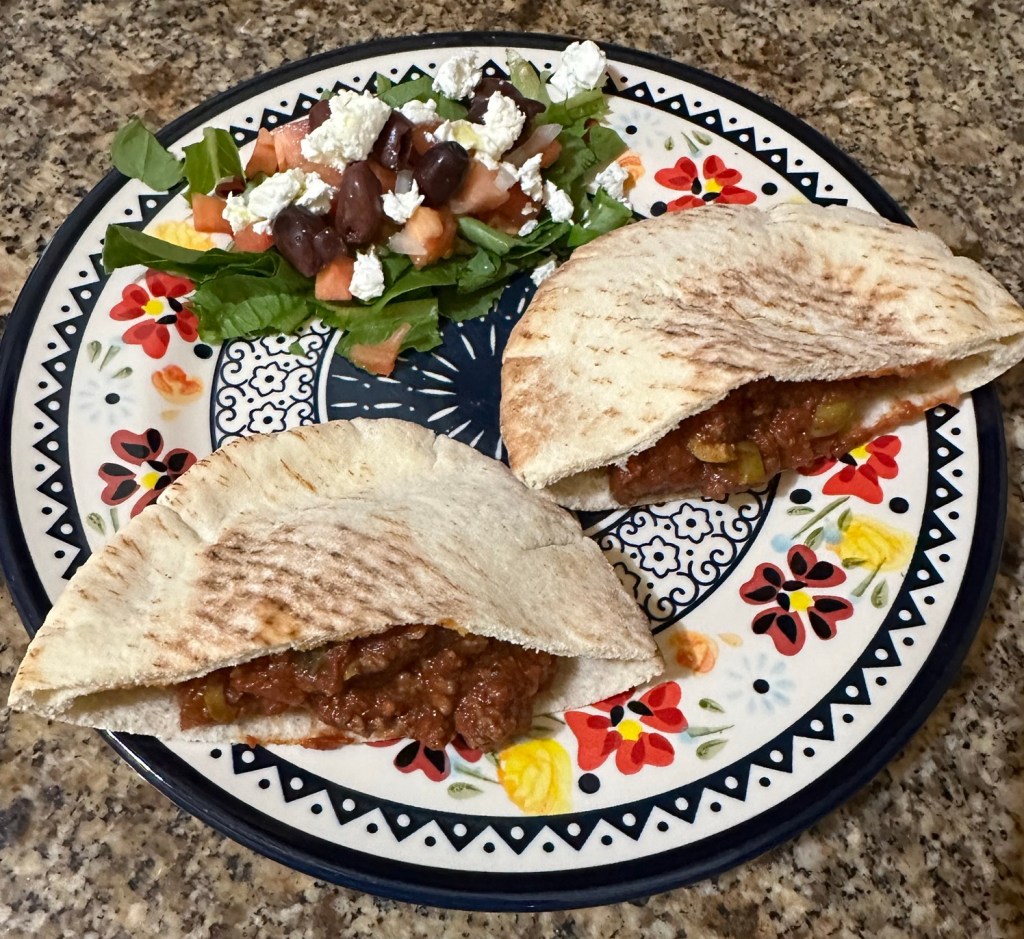
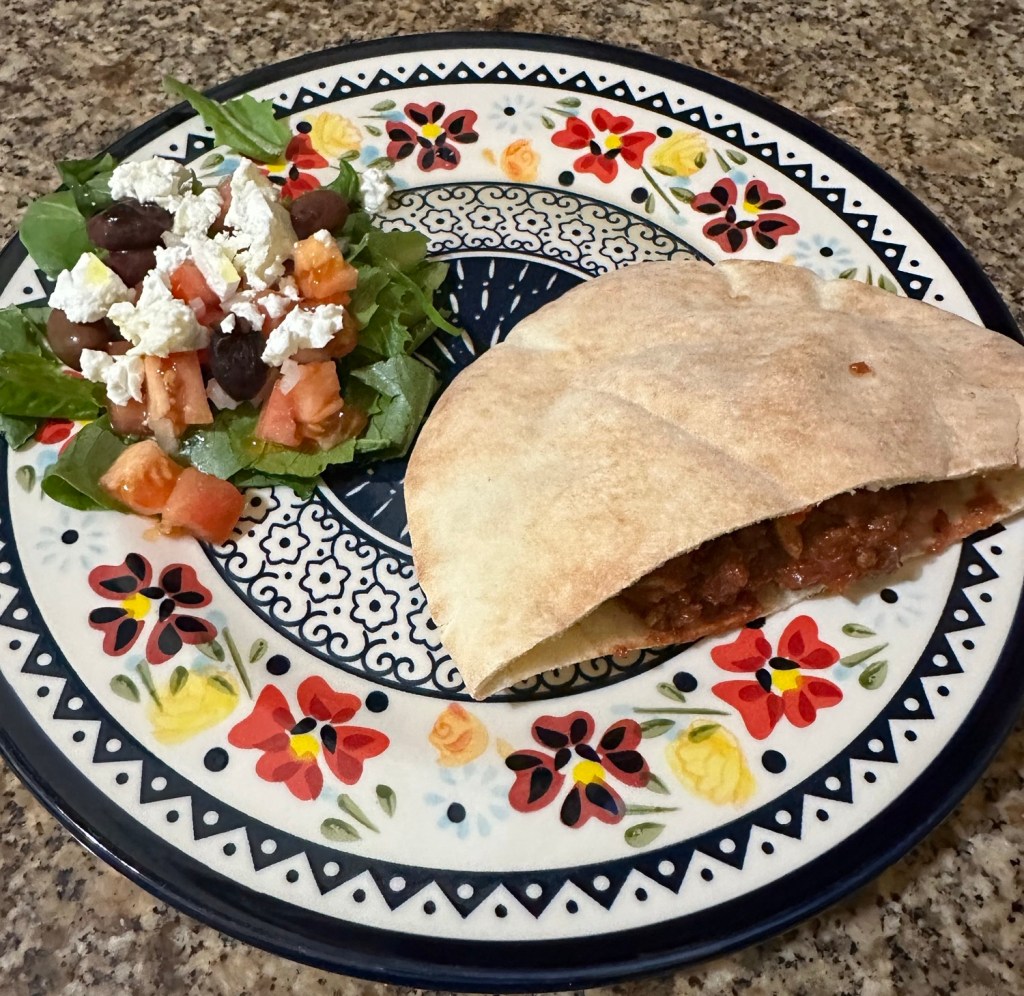
I’m guessing that he got the idea to serve the meat in pita pockets from the cookbook, and that was a great idea, along with my Greek chopped salad. This is a salad I copied from a gyro place in town: chopped romaine, tomato, and onion, plus Kalamata olives and crumbled feta, dressed with olive oil and lemon juice—except that I used the excellent calamansi vinegar that we have in place of the lemon juice. It’s definitely a “keeper,” and I will try to write down a more accurate recipe the next time Ken makes this. I hope it’s soon.
Happy eating!



 So Many Dishes
Leave a reply to Lynn Pernezny Cancel reply