Although I can still sing the theme song to the animated 60s cartoon, Super Chicken, what I’m referring to is the chicken dish I made last evening. It was a new recipe, without doubt the best new chicken dish I’ve made in a while.

I had printed out the recipe for Antipasto Chicken Skillet several months ago. It appeared in the Washington Post, developed by nutritionist Ellie Krieger. I’ve made several of her recipes in the past and enjoyed them. They’re healthy and well balanced. This looked appealing, and it’s been in my mental “I want to try this” file since I first read it.
It’s a very vegetable-forward recipe; it’s essentially chicken breast cutlets with a vegetable topping. It calls for any mix of drained jarred vegetables, and lists as possibilities roasted red peppers, artichoke hearts, sun-dried tomatoes, mushrooms, olives, or capers. The first thing that came to mind when I read that was giardiniera, the Italian pickled vegetable dish that is a traditional part of antipasto. (Chicago style giardiniera is different, as it’s oil-based and spicier, meant to be used as a condiment). I knew that was where I wanted to start.
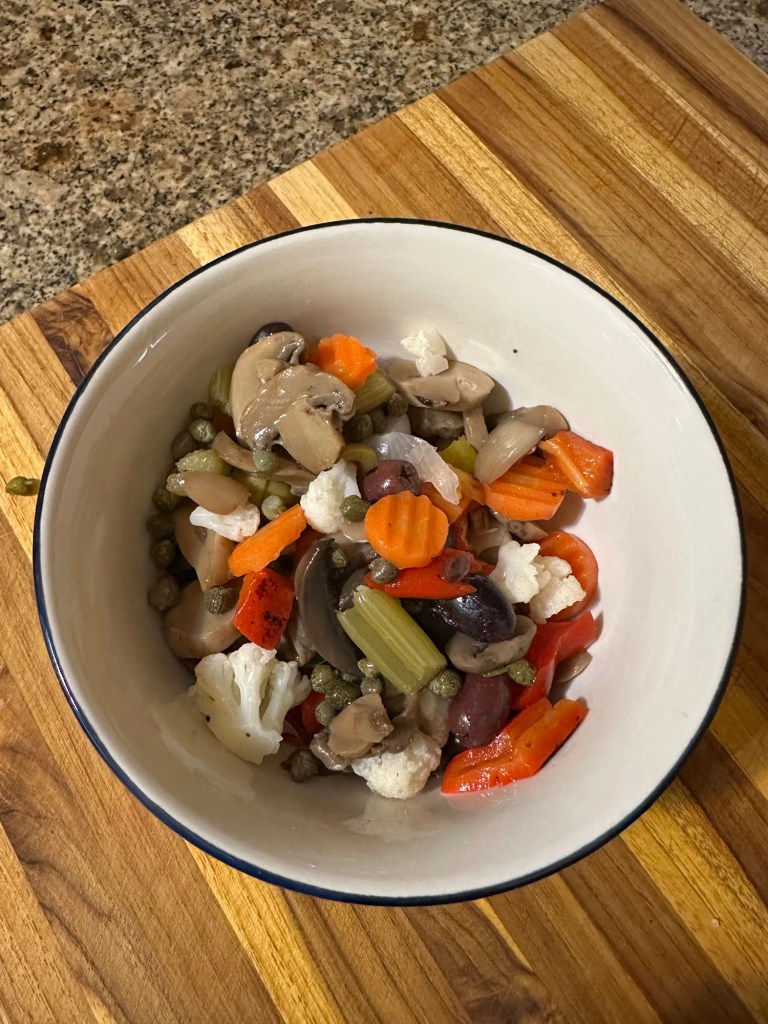
I started with a cup of giardiniera for my veggie mix. I coarsely chopped the larger cauliflower pieces, but the remaining vegetables were small enough that I didn’t feel the need to chop them further. I had a jar of roasted peppers, so I coarsely chopped a large pepper. In went some jarred sliced mushrooms, plus manzanilla and Kalamata olives and a generous spoonful of capers.
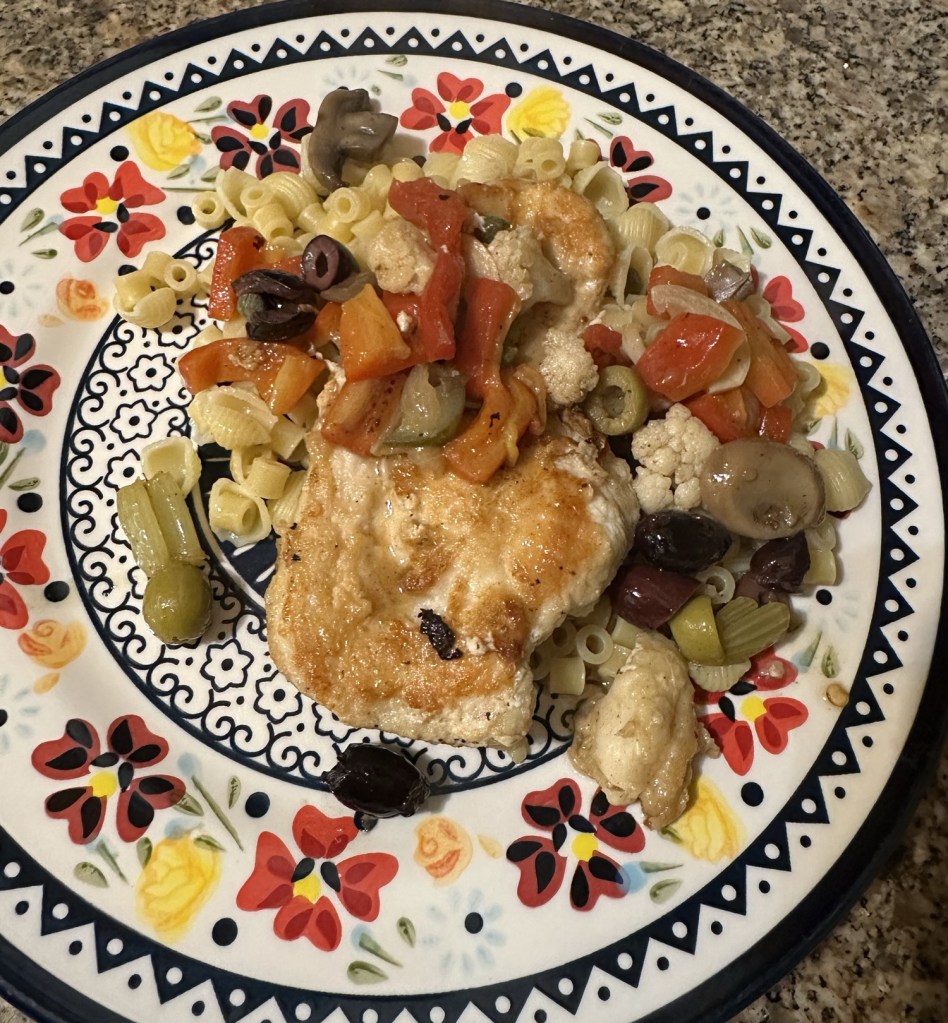
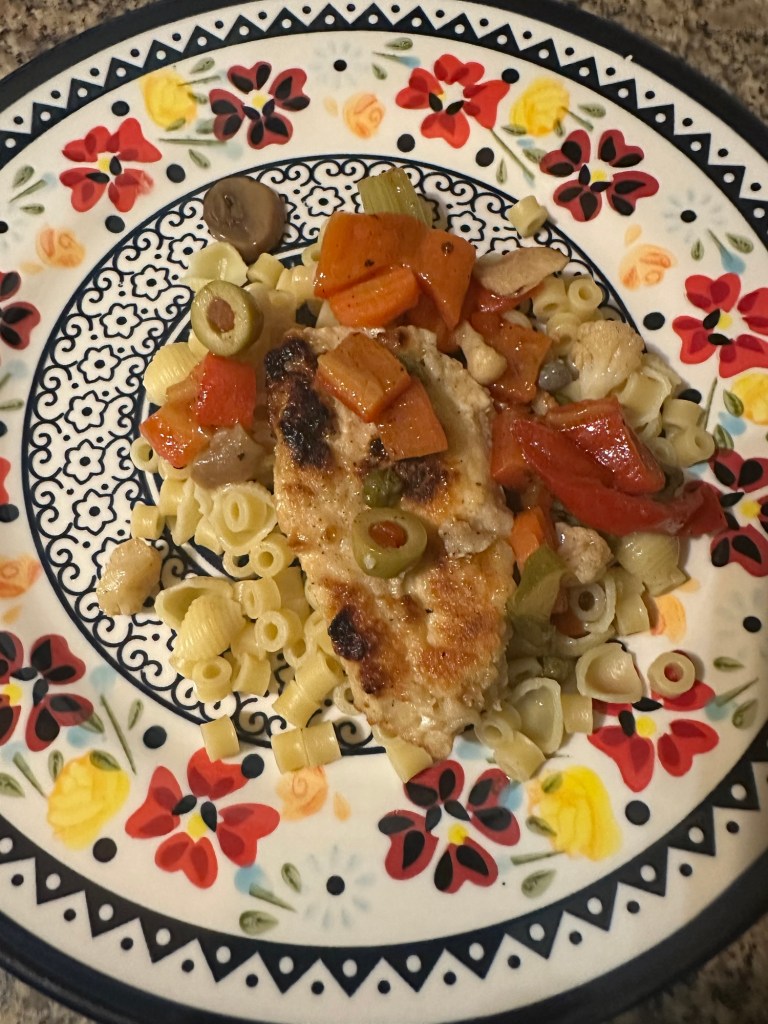
The original recipe calls for 4 boneless chicken breasts, about 6 ounces each. I had one that weighed close to a pound that I sliced into three pieces before pounding. Because I was able to cook all the chicken in one batch, I was able to reduce the olive oil by a tablespoon. Other than that, I stuck to the recipe until it came time to plate the chicken. Ellie Krieger says to serve it over arugula. We put it over small pasta, stumps of boxes of ditalini and small shells. The sauce is so good, and we figured we had plenty of vegetables as it was. The recipe says that it serves 4. It certainly would be enough chicken, but the vegetables are the stars, and I think we’d be fighting over them if I’d tried to split the sauce four ways. Three was about perfect, since Ken and I split the leftovers for a light lunch.
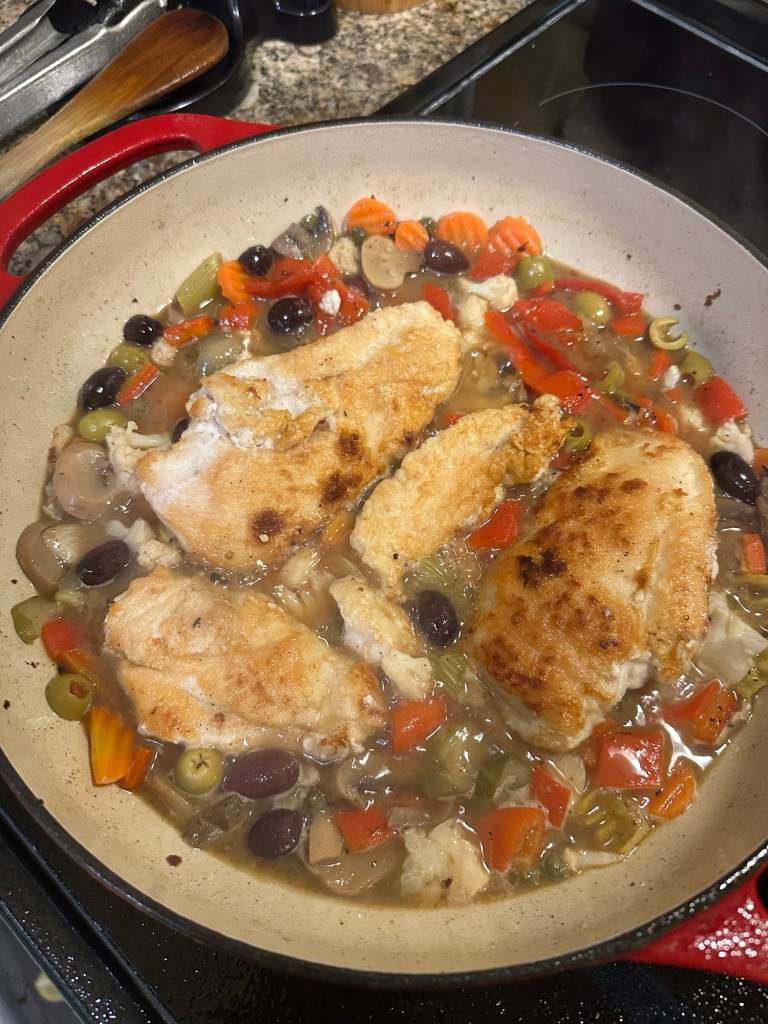
The finished dish was so delicious and so quick to put together that I kept thinking I had forgotten something. Ken says we’re going to make this again soon, and not let it be one of those recipes where we say that and then never make it again. I love the idea that it will be different every time, depending on what veggies you use. Because I included the pickled giardiniera, I didn’t need to add any lemon juice at the end; the dish had enough acid. Next time might be different. I can see myself roasting some Roma tomatoes to include. It’s always going to be super!
Antipasto Chicken Skillet
- 3 tablespoons flour
- 1/2 teaspoon kosher salt
- 1/2 teaspoon black pepper
- 4 boneless, skinless chicken breasts, about 6 ounces each, pounded to 1/2-inch thickness
- 4 tablespoons olive oil, divided
- 2 large garlic cloves, thinly sliced
- 1 cup dry white wine
- 2 cups coarsely chopped, drained jarred vegetables (any mix of vegetables, such as roasted red peppers, artichoke hearts, sun-dried tomatoes, mushrooms, olives, capers)
- 1/2 cup water
- 1 tablespoon unsalted butter
- Fresh lemon juice, to taste
- Salt and pepper, to taste
Mix the flour, salt, and pepper on a plate. Dredge the chicken so that it is lightly coated, shaking off the excess flour. In a large skillet, heat 1 1/2 tablespoons of the oil until shimmering. Place two pieces of chicken in the pan and sear until browned, 2 to 3 minutes per side. Transfer the chicken to a plate, repeat with another 11/2 tablespoons oil and the remaining chicken, transferring those pieces to the plate once browned. (I used 2 tablespoons of oil and browned all three pieces in one batch).
Reduce the heat to medium and add the remaining tablespoon of oil. Add the garlic and cook for 30 seconds. Add the wine, increase the heat to medium high, and cook until wine is reduced by half, 2 to 3 minutes. Add the chopped vegetables and water to the skillet. Bring to a boil, then cook until the liquid has reduced a little and the vegetables are warmed through, about 2 minutes. Stir in butter until melted.
Return the chicken and any accumulated juices to the pan, nestling it into the sauce. Reduce the heat to medium low and simmer, uncovered, until the chicken is cooked through, about 3 minutes, flipping the chicken at the midway point. Taste the sauce and add 1 to 2 tablespoons lemon juice and additional salt and pepper, if needed, depending on the acidity and seasoning of the vegetables.
Serve the chicken with the warm sauce and vegetables on top. Serves 4.
Happy eating!


 So Many Dishes
Leave a comment